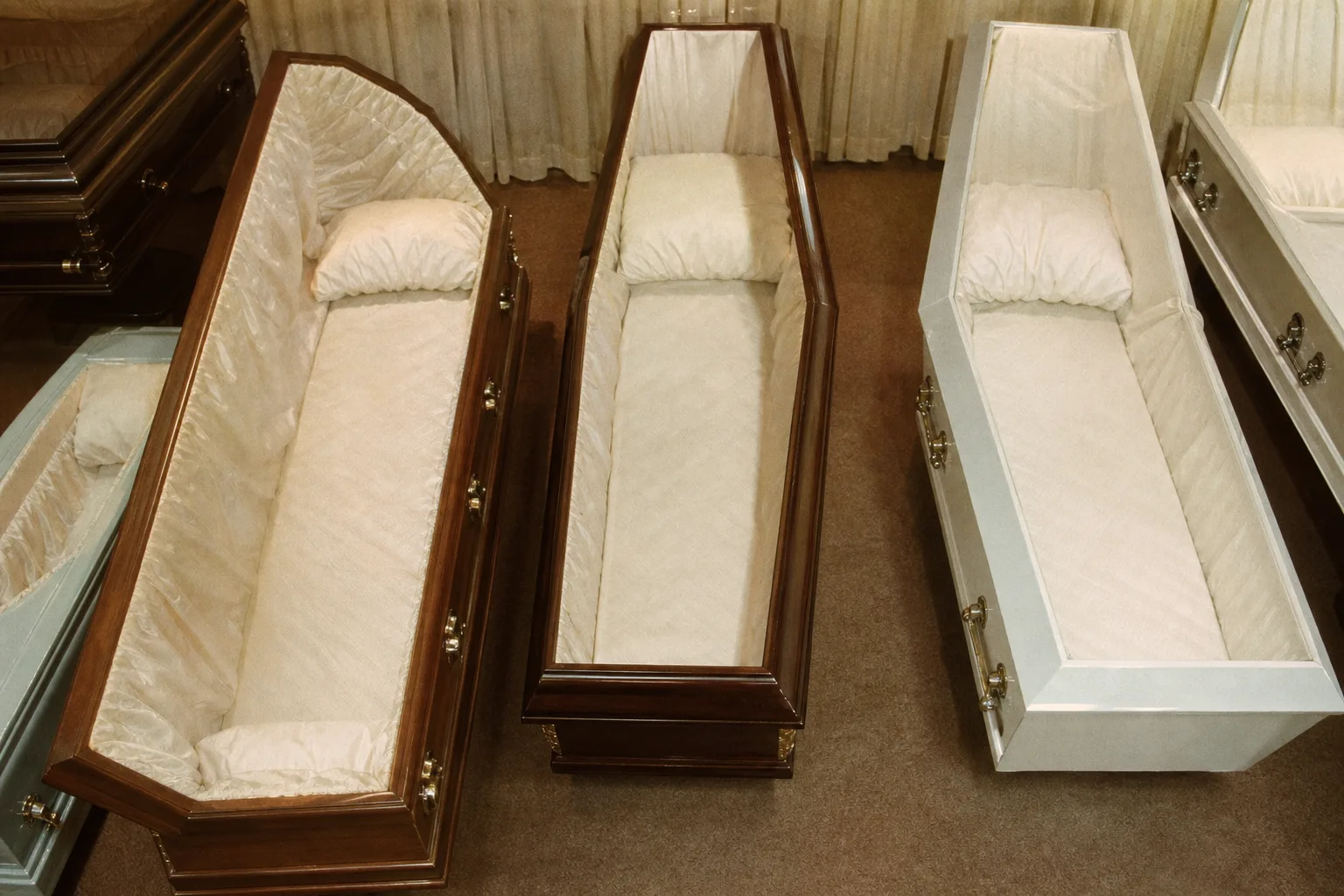
One box costs four times another. What changes at each step of the price list
A walk up a funeral home price list from the cardboard container to solid bronze, naming the single construction change that separates each step from the one below it.
Gauge runs backwards
With steel, a lower gauge number means thicker metal, so 16 gauge is heavier and costlier than 20 gauge. The measurement is in thousandths of an inch and is invisible once the container is finished and lined.
- Cloth over pressed wood
- The cheapest step above a plain cremation container is a pressed-wood shell covered in napped polyester fabric. Its handles are usually decorative rather than load-bearing.
- Veneer versus solid
- A wood-look container may be poplar stained to resemble oak, or a hardwood veneer bonded to an engineered core. Price cards are required to describe the material accurately, so read them rather than judging by grain.
- The hardwood ladder
- Oak is typically the first true solid hardwood on a list, followed by ash, cherry, walnut and mahogany. Each step buys a different species and finish, not a different structure.
Kojak's Palmetto
Kojak's Palmetto The top of nearly every list is copper or bronze, quoted in ounces per square foot, commonly 32 or 48. These metals do not rust, which is the entire basis for their premium.
Every funeral home keeps a printed price list, and on it the burial containers are usually arranged in a single climbing column, from a few hundred dollars at the top of the page to five figures at the bottom. Nothing on that page explains what separates one line from the next. The staff will walk you through the showroom, but the showroom is arranged to be looked at, not to be compared. What follows is the same climb, step by step, with the one thing that changes at each step named plainly, so you can decide where your own money stops buying something you would actually notice.
The bottom three steps are about material, not construction
At the very bottom sits the container built from heavy corrugated fiberboard or unfinished pressed wood, sold for direct cremation and for graves that require nothing more. One step up, that same pressed-wood shell gets covered in cloth, usually a napped polyester in gray or blue, and given a hinged lid and handles that are decorative rather than structural. The next step replaces the pressed wood entirely with solid softwood, pine or poplar, joined and finished. Three steps, three different substrates, and the price roughly doubles and doubles again. The change is real and you can see it from across a room.
Steel is priced by gauge, and the numbers run backwards
Above wood, most price lists move into steel, and steel is sold by gauge, where a higher number means thinner metal. Twenty gauge is the common entry point, eighteen is the middle, sixteen is the heavy end of ordinary production. Each step down in gauge number is a step up in thickness measured in thousandths of an inch, and each is a real material cost the manufacturer passes along. Between twenty and sixteen you may be looking at a doubling of the metal price. Standing beside them, the visible difference is close to nothing: same finish, same interior, same hardware.
The other steel variable is the rubber gasket and the crank-operated latch that press the lid against the body, described on price lists as sealing, protective, or gasketed. That feature typically adds several hundred dollars over the identical non-gasketed model from the same maker. Sellers outside the funeral home publish the same ladder in the same order, and comparing them line by line is the fastest way to see what each feature costs on its own: a gasketed eighteen-gauge steel Casket from an online supplier and the one in the showroom are frequently the same product from the same factory. The Federal Trade Commission oversees how funeral providers disclose these prices and how they handle a container you supply yourself.
Hardwood and the metals above steel
The hardwood tier starts where the veneer stops. Below it, a wood-look container may be poplar with a stained finish or a hardwood veneer over engineered core, and it will be described accurately if you read the card closely. Solid oak is the usual first true hardwood, then ash, then cherry, then walnut, then mahogany, each a step of a thousand dollars or more that buys nothing but a different tree. Grain, color and weight change. Joinery may improve at the upper end, with mitered corners and a hand-rubbed finish, but the structure underneath is the same box.
Above all the steel and all the wood sit copper and bronze, and these are priced by the weight of the metal, quoted in ounces per square foot, commonly thirty-two or forty-eight. They do not rust, which is the whole argument for them, and they cost multiples of the heaviest steel. This is the top of nearly every list in the country. The step from sixteen-gauge steel to thirty-two-ounce bronze can be larger in dollars than every step below it combined, and from six feet away, with the lid closed, almost nobody could tell you which one they were looking at.
Where the spending stops showing
Two things are worth separating: what the family sees during the service, and what happens in the ground. The visible part is the finish, the hardware, the interior fabric and the way the head panel is gathered, and every one of those improves noticeably through the first several steps and then plateaus. The buried part is thickness and sealing, and no one present will ever observe it. A grave liner or vault, which many cemeteries require, is a separate purchase that carries the earth load regardless of what the container is made from. Once you have decided how the container should look at the service, the remaining steps are buying something you have chosen to believe in rather than something you will see.
Reading your own price list
Ask the funeral director to name the single difference between any two adjacent lines, and write the answer down beside the price. The honest answers are short: two gauges of steel, a gasket, oak instead of poplar, a crepe interior instead of twill. When the difference is a word you cannot picture, ask to see both, side by side, with the lids open and closed. Most families find their stopping point somewhere in the middle of the wood tier or the light end of steel, and they find it faster once each step has a name attached to the number.
The list is a ladder, and every rung has a reason. Knowing which rung stops changing what anyone will see is the difference between spending on a decision and spending on the absence of one.